Delay Settlement from Journal Posting in Dynamics 365 Finance 10.0.46
Introduction
In Microsoft Dynamics 365 Finance, finance teams often need to post journals without immediately settling transactions. The Delay Settlement from Journal Posting feature in version 10.0.46 allows users to control when settlements are applied, helping improve accuracy and flexibility in financial processes.
In this blog, we will explain how this feature works and how to use it in Dynamics 365 Finance 10.0.46.
Why This Feature Deserves Attention
Microsoft’s Delay Settlement from Journal Posting capability in Dynamics 365 Finance 10.0.46 is an important step forward for finance teams that want more reliable payment processing.
Traditionally, payment journal posting and invoice settlement have been tightly linked. That means if settlement runs into an issue during posting, the payment itself may fail to post. This can create delays, manual rework, and unnecessary operational friction.
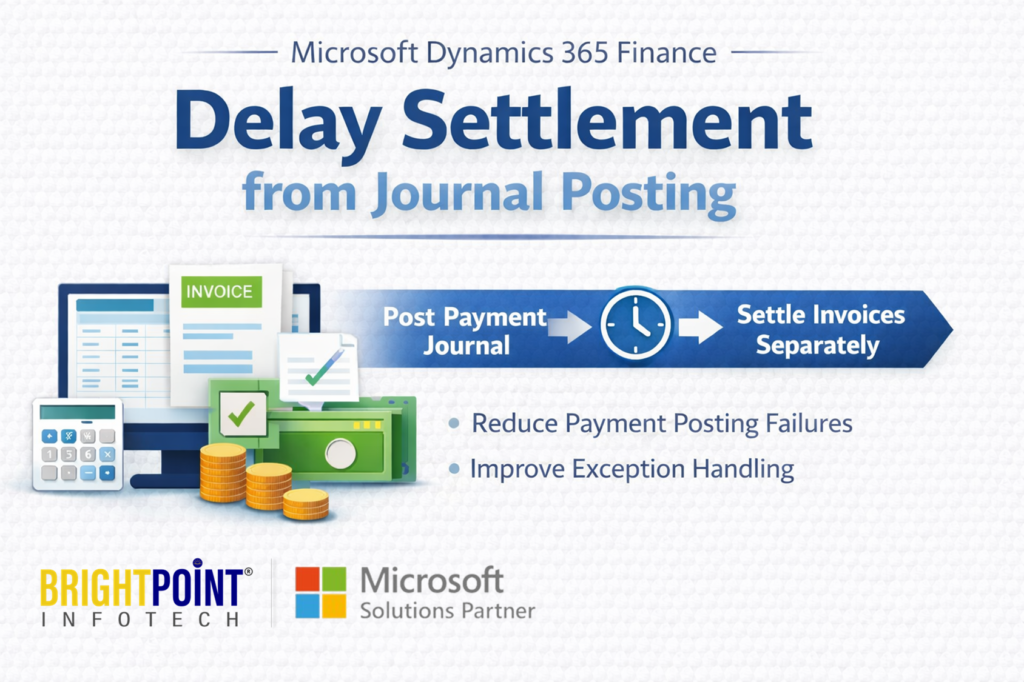
With this new feature, Microsoft is moving toward a more resilient process model by allowing settlement to happen separately from journal posting. In practical terms, this means a valid payment can be posted first, while settlement can be completed afterward as a separate step.
For organizations running high-volume accounts payable and accounts receivable transactions, this is more than a product enhancement. It is a meaningful operational improvement.
What Is Delay Settlement from Journal Posting?
The feature enables finance teams to separate payment journal posting from invoice settlement for customer and vendor payment journals.
In the traditional workflow:
The payment journal is posted
Settlement runs during the same process
If settlement fails, the posting can fail as well
With delayed settlement enabled:
The payment journal can post first
Settlement is handled separately afterward
Settlement issues can be managed independently without stopping valid payment postings
This change helps remove a major dependency in the payment process and reduces the risk of a single settlement exception delaying an entire payment run.
Why It Matters for Finance Teams
This feature directly addresses one of the common pain points in ERP-based finance operations: when a downstream settlement issue blocks an otherwise valid financial transaction.
Reduces payment posting disruptions
By separating settlement from posting, finance teams can reduce the risk of payment journals failing because of settlement errors. This is especially useful in high-volume payment scenarios.
Improves operational continuity
Payments can be recorded on time, even if settlement needs to be completed later. This helps finance teams avoid delays in daily processing and maintain smoother transaction flow.
Lowers manual rework
Instead of reposting journals or troubleshooting blocked payment runs, teams can focus specifically on the settlement exception. This creates a cleaner and more manageable exception-handling process.
Strengthens finance process control
When posting and settlement are treated as separate checkpoints, organizations gain more visibility into where issues occur and how they should be resolved.
Strategic Impact on AP and AR Operations
For many organizations, payment processing reliability is just as important as payment accuracy.
In accounts payable, a delayed or failed payment batch can affect vendor relationships, treasury planning, and internal workload. In accounts receivable, settlement issues can delay proper clearing and create confusion in open transaction management.
This feature supports a more robust finance architecture by reducing the “all-or-nothing” dependency between payment posting and settlement. That is particularly valuable for businesses with:
High transaction volumes
Complex payment and receipt processes
Frequent settlement mismatches
Multiple exception scenarios in AP and AR
For finance leaders, the broader takeaway is clear: Microsoft is continuing to modernize Dynamics 365 Finance by reducing process bottlenecks and improving transaction resilience.
What Your Team Should Review Before Adoption
Before enabling or planning around this feature, finance and ERP teams should assess the business-process impact.
Key areas to review include:
Payment process dependencies
Identify where your current process assumes that posting and settlement happen at the same time.
Reporting and reconciliation logic
Review any reports, controls, or downstream processes that treat “posted” and “settled” as the same status.
Customizations and integrations
Check whether any custom workflows, automation logic, or integrations rely on synchronous settlement behavior.
User training and exception handling
Make sure finance users understand that payment posted and settlement completed may become two separate events.
Who Should Care Most About This Feature?
This capability is especially relevant for:
CFOs and controllers focused on finance process efficiency
AP managers handling large vendor payment runs
AR teams managing customer receipts and settlement matching
ERP leaders planning a Dynamics 365 Finance upgrade
Organizations looking to reduce manual finance exceptions
If your team has experienced payment journals failing because of settlement issues, this is a feature worth evaluating closely.
Brightpoint Infotech’s Perspective
At Brightpoint Infotech, we believe the real value of ERP modernization comes from solving day-to-day operational bottlenecks that impact finance teams.
Delay Settlement from Journal Posting is a strong example of that. It helps reduce friction in payment processing, improves control over exceptions, and supports more reliable finance operations in Microsoft Dynamics 365 Finance.
For organizations planning a Dynamics 365 Finance upgrade, reviewing this feature early can help avoid process gaps later and ensure your finance workflows, controls, and reporting are aligned with the new model.
How Brightpoint Infotech Can Help
Brightpoint Infotech can help your organization:
Assess the business impact of new Dynamics 365 Finance features
Review AP and AR process risks tied to payment journals and settlement
Validate reporting, controls, and exception workflows
Build UAT scenarios for new finance process capabilities
Create a practical roadmap for Dynamics 365 Finance optimization or upgrade
If your organization is evaluating Dynamics 365 Finance, planning an upgrade, or looking to improve payment processing reliability, Brightpoint Infotech can help you turn new product features into practical business value.
Contact Brightpoint Infotech today to assess how features like Delay Settlement from Journal Posting can support stronger finance operations, better exception handling, and a more resilient ERP process design.
Explore Brightpoint Infotech Solutions
Explore Our Recent Blogs & Resources Whether you are a start-up, an SMB, or an enterprise, the Brightpoint Infotech blog is the best place to get inspired and learn more about Microsoft Business Applications.